

Considerations: “Widow’s Bay” and the Genre Jump Scare
The line between horror and comedy is thinner than we think.


Covering the annual industry awards races, with sharp commentary on the pictures, the players, the money and the spectacle.
In recent years, a trend has emerged in horror: auteurs have moved into the genre after first establishing themselves in sketch comedy. In 2018, Jordan Peele of Key & Peele won the Best Original Screenplay Oscar for Get Out, his feature directorial debut (which he would follow up with 2019’s Us and 2022’s Nope). This year, Amy Madigan won Best Supporting Actress for her devious turn in the horror film Weapons, the second feature from Zach Cregger (after 2022’s Barbarian), a founding member of the comedy troupe The Whitest Kids U’ Know.
There’s clearly a connection between comedy and horror. Both genres succeed by getting a response—a laugh or a jump—out of an audience member. And there have been countless films that straddle both genres, like An American Werewolf in London, The Evil Dead, Scream, or The Cabin in the Woods. (Even Freddy Krueger had plenty of zingers.) Similarly, Peele and Cregger make films that are both narratively ambitious and stylistically reverent, capturing both critical and commercial success.
Katie Dippold, the creator and showrunner of Apple TV’s Widow’s Bay, understands these similarities since she also came to horror from comedy, following early writing credits on Mad TV and Parks and Recreation. “I really do think there’s something to people who started in sketch comedy understanding how to build something, setting up the anticipation and the payoff,” says Dippold. “What I find fun is that you don’t know if that build is going to lead to something that’s going to make you laugh or scare you.”
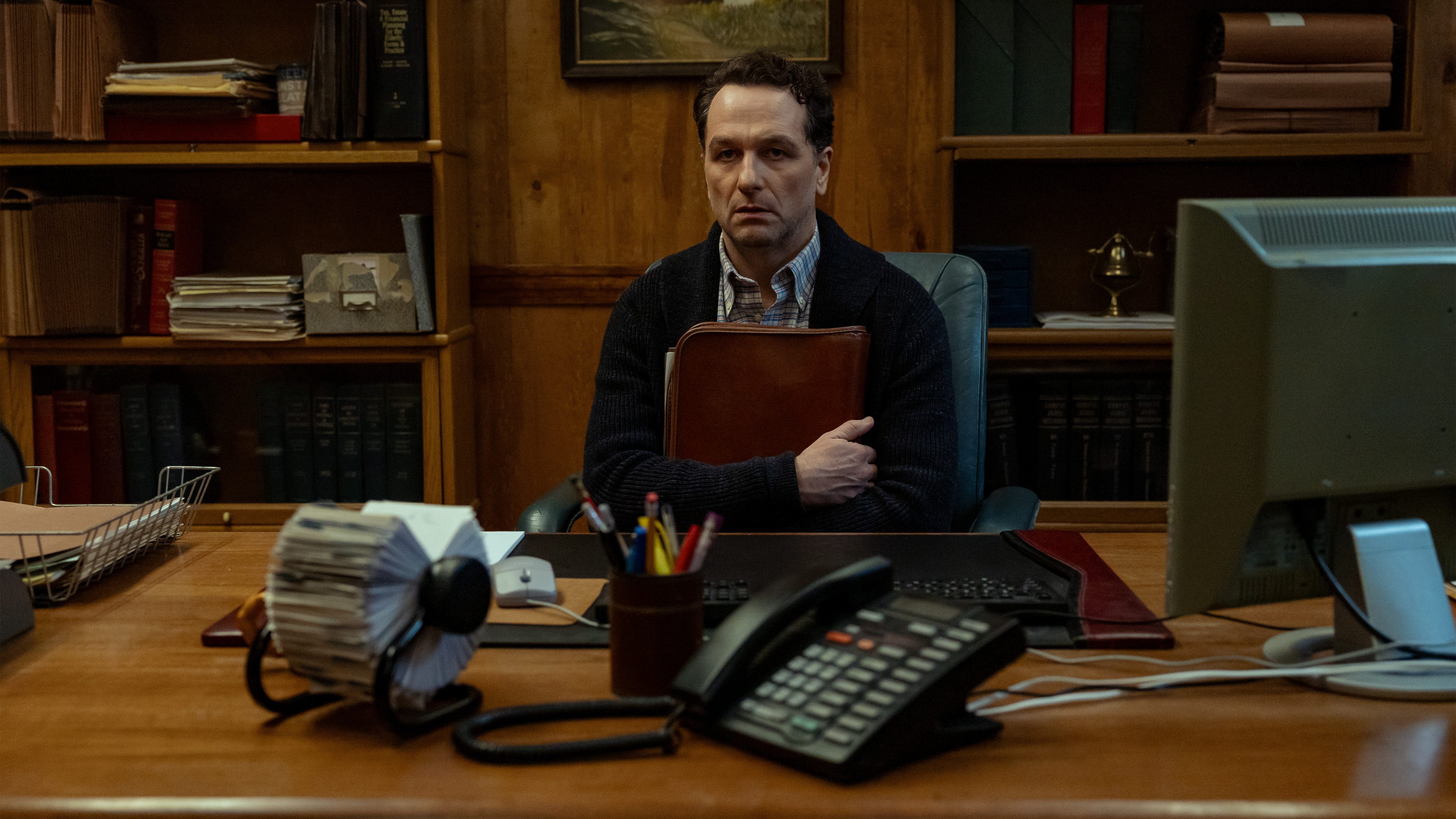
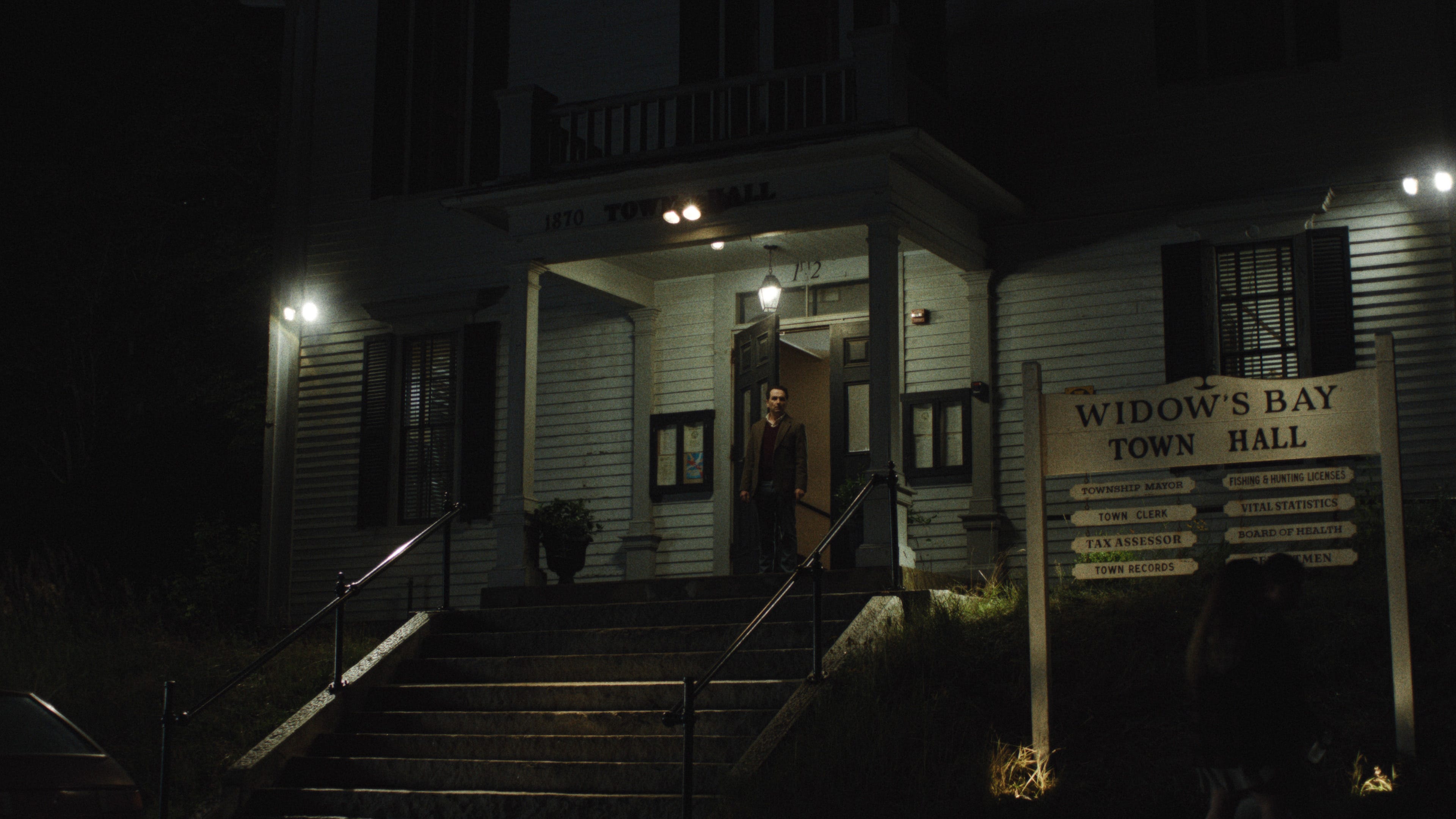
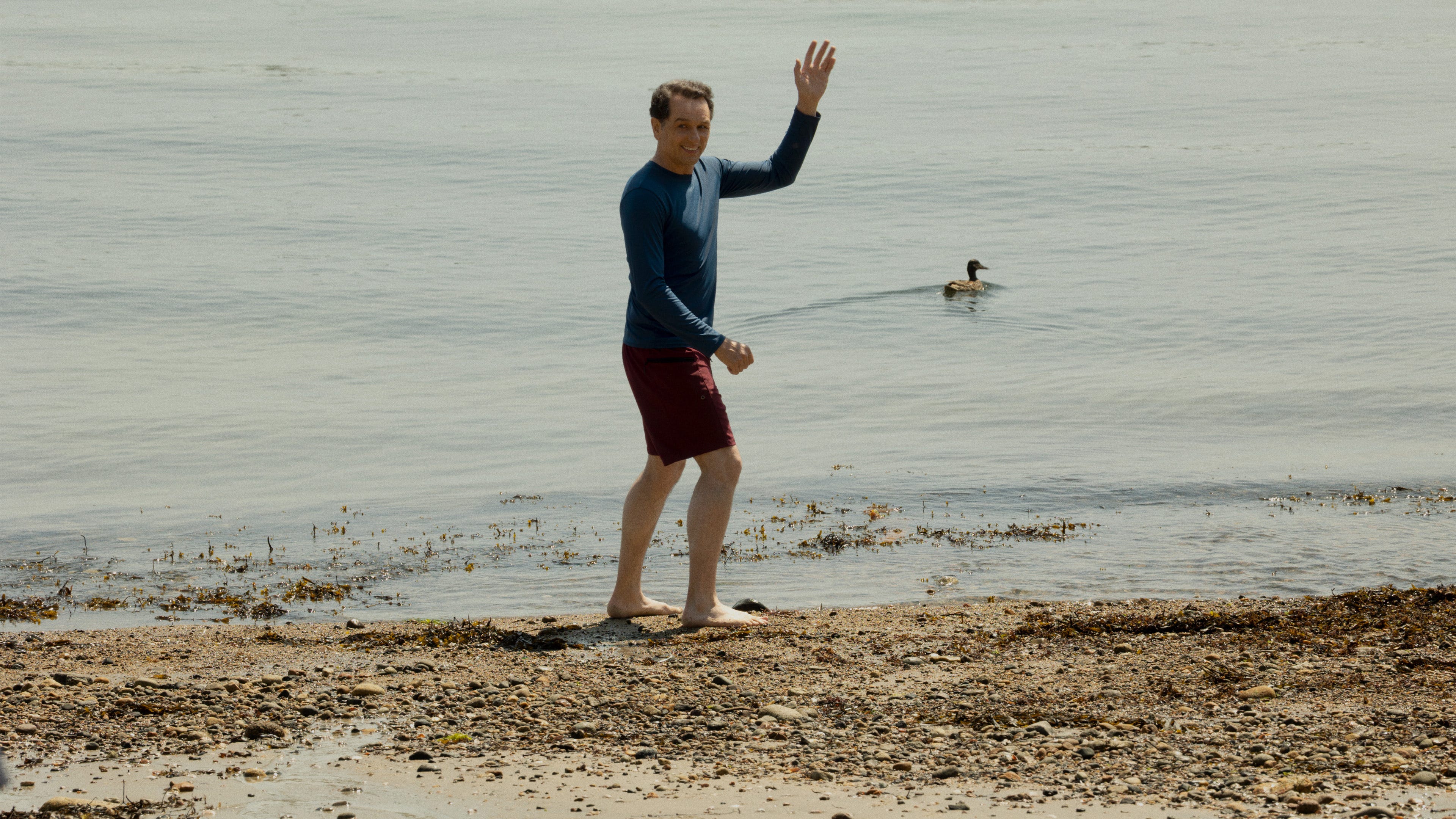
Widow’s Bay will likely make you do both. Matthew Rhys stars as Tom Loftis, the mayor of the eponymous New England island haunted by an assortment of evils. But the optimistic Tom believes in the best for his town and hopes to turn the island into a vacation destination. (Imagine if the mayor in Jaws were played by the lovably rascally Rhys instead of Murray Hamilton.) Despite Tom’s skepticisms—and the town crankpot Wyck (Stephen Root), a fervent believer that the island is cursed and a major foil for Tom—the evil lurking below Widow’s Bay’s picturesque, quirky surface manifests through ominous fog, a killer clown, an amorous sea hag, a haunted inn, and a spellbook that nearly turns a cocktail party into a mass drowning.
Although its supernatural elements are genuinely unsettling, Widow’s Bay is a comedy first, a horror show second. Much of the humor comes from the characters’ reasonable reactions to the outlandish supernatural elements haunting the island, such as Tom spending a night in the hotel to prove it’s not haunted (he’s wrong—even the innkeeper refuses to stay overnight) and later being stalked by the aforementioned sea hag (who smothers her male victims by sitting on their faces, which leads to a physical gag in which she’s propelled across Tom’s living room thanks to a well-timed reclining armchair). Like most great sitcoms, the real fun comes from watching characters navigate increasingly unhinged scenarios.
In fact, Dippold first wrote Widow’s Bay as a Parks and Rec spec script. “I’ve been thinking about this for 18 years,” she says. During that time—during which she co-wrote the female-led Ghostbusters and penned the Justin Simien–directed Haunted Mansion—the show evolved from a broad comedy to a series that deftly balances humor with horror, a blend that Dippold says comes from the collaborative process of making TV. “With features, you just write the script and you’re lucky if the director wants you on set,” she says. “Not being able to have much say once the script is in and [now] being in a position where I have all the say naturally made me someone who wants that collaboration. These actors are brilliant, the production design team is tremendous, and the directors who came in had other ideas that I would not have thought of. It’s thrilling to me, and I can’t imagine doing it in a way where it’s all my vision and nothing will ever change.”
The brooding visual tone for Widow’s Bay grew from Dippold’s collaboration with executive producer Hiro Murai, the Emmy-winning director known for his work on The Bear, Atlanta, and Station Eleven, and who helmed five of the season’s 10 episodes. The pair took cues from a memory from Dippold’s teenage years: the series was inspired by a haunted house in Long Branch, New Jersey, which Dippold visited as a teenager. “It was the ’80s, and it was lawless. They could chase you around and grab you,” she says. “That mix of being scared, but you’re having the time of your life, is a feeling I’ve wanted to capture ever since.”
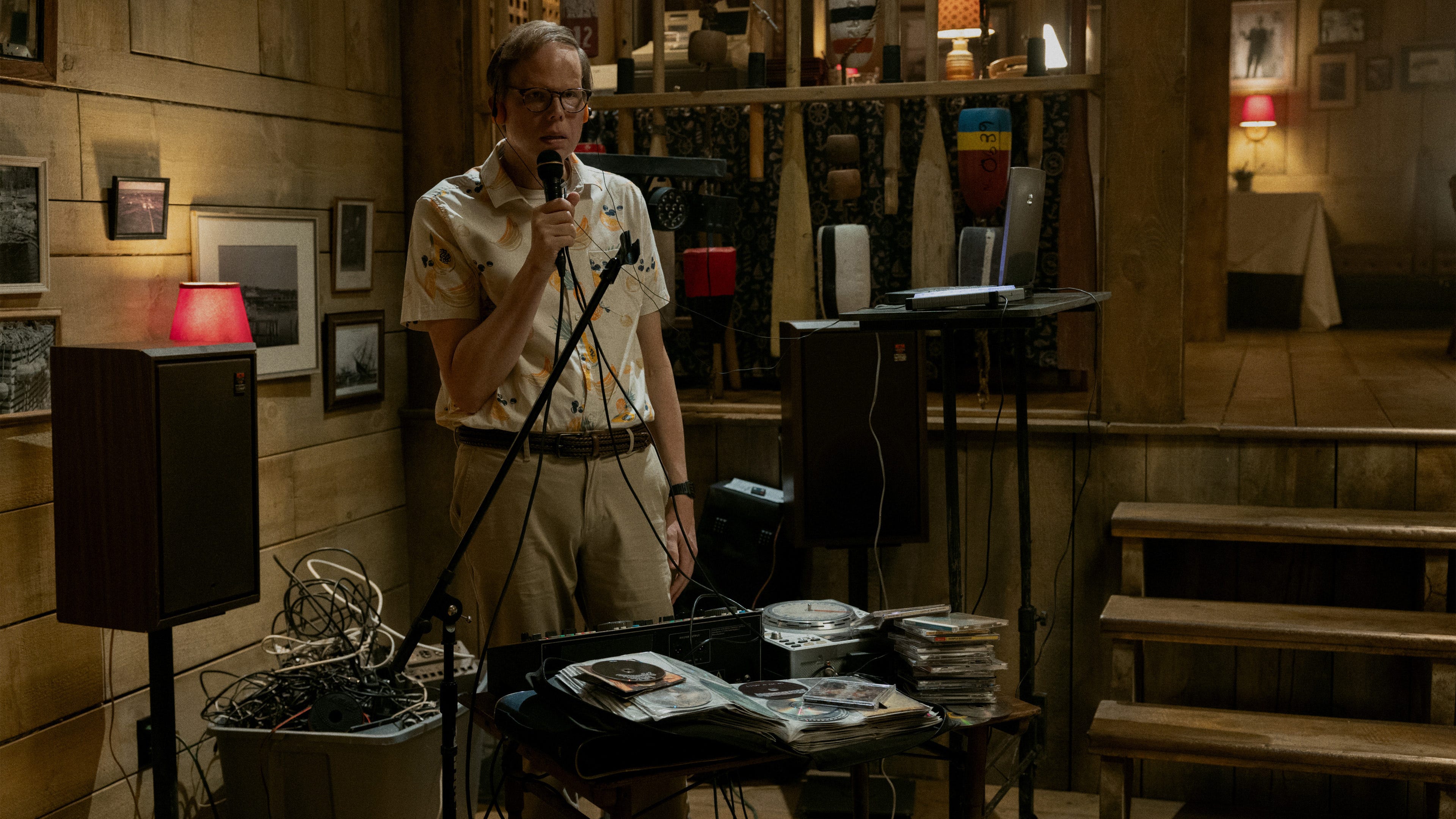
Another element that allows the series to meld disparate tones is its cast, which alongside Rhys and Root includes Kate O’Flynn as Tom’s mousy assistant Patricia, Kevin Carroll as the town sheriff Bechir Clemmons, and Dale Dickey as Rosemary, one of Tom’s no-nonsense employees. With the exception of Root—known for NewsRadio, Office Space, and his Emmy-nominated role in Barry (plus the Netflix animated series Strip Law, for which he’s also an Emmy contender this season for his voice work)—most of the main cast are more familiar for their work in television dramas. (Meanwhile, the supporting actors tend to be more recognizable for their comic performances, including Emmy winner Jeff Hiller, Tim Baltz, Toby Huss, Neil Casey, Connor Ratliff, and Chris Fleming.)
Dippold originally considered populating her fictional town with comic performers she has admired since she was performing improv at the Upright Citizens Brigade Theatre in New York two decades ago, but that could have also disrupted the comedy-horror balance she was aiming for. “When I imagined an actor that you know from comedy starring in it, it just took me out of it,” she says. “Like, I don’t believe it’s a real place, and I don’t know that I would watch the show. As a horror fan, I want to know that they’re taking it seriously.” Dippold was a fan of Rhys’s Emmy-winning role on The Americans, and the actor was a suggestion from casting director Allison Jones. “He always just plays the truth of the scene,” Dippold says of his performance as Tom. “He never goes for the joke. He’s so naturally funny, and he understands what’s funny about [the scene].”
When Dippold tells me that, I share an anecdote about a screening of Tootsie followed by a Q&A with director Sydney Pollack, who said in the conversation (I’m paraphrasing) that he was always astounded by how funny the movie was because the mood on set very much felt like he was making a drama. This resonates with Dippold. “Often when I talk about influences on the show, I talk about Stephen King and John Carpenter, Atlanta and Parks and Rec,” she says, “but I am secretly also thinking about Tootsie—but I never say it, because I know it’s going to confuse the hell out of everyone.”
We both agree that it’s Dustin Hoffman’s dedicated performance that makes the film so funny. “I mean, he’s in a drama,” Dippold laughs. “If he was playing it any differently, it would feel terrible. And I think the actors on this show are doing something very similar. They don’t look at it like they’re in a comedy or a horror show; they’re just playing the scenes and they’re not thinking about the genres. And I think that helps a great deal.”
When it comes to the Emmys, however, Widow’s Bay will be submitted as a comedy series—and while it might technically be the most gruesome comedy of this year’s slate, it’s still one of the funniest. Yet, the Emmys have been cold to genre shows in the comedy categories, with recent exceptions in Netflix’s Wednesday and FX’s What We Do in the Shadows, two examples that couldn’t be more different in tone. (For film awards, horror typically campaigns in the comedy categories; both Get Out and The Substance were submitted as comedies at the Golden Globes.)
Widow’s Bay presents a challenge for Emmy voters: Can the comedy series Emmy be as inclusive as its dramatic counterpart, which after four wins for Game of Thrones, has included nominees like The Boys, The Last of Us, Lovecraft Country, The Mandalorian, and Stranger Things? The drama is baked into those science fiction, fantasy, and horror shows; likewise, in Widow’s Bay, the jokes are as vital as the chills, suggesting to voters that it’s just as much of a feat to nail a jump scare as it is a punchline.
This show is especially genius because I’m terrified and covering my eyes and a second later snort laughing and then replaying the scene because I laughed so hard I missed something (the shriek, the BarcaLounger).