

Disarming the Audience
Emily Ann Hoffman on the power of “human-crafted” animation.
We’re pleased to present another excerpt from our summer issue. Subscribe to find more articles like this one in print.
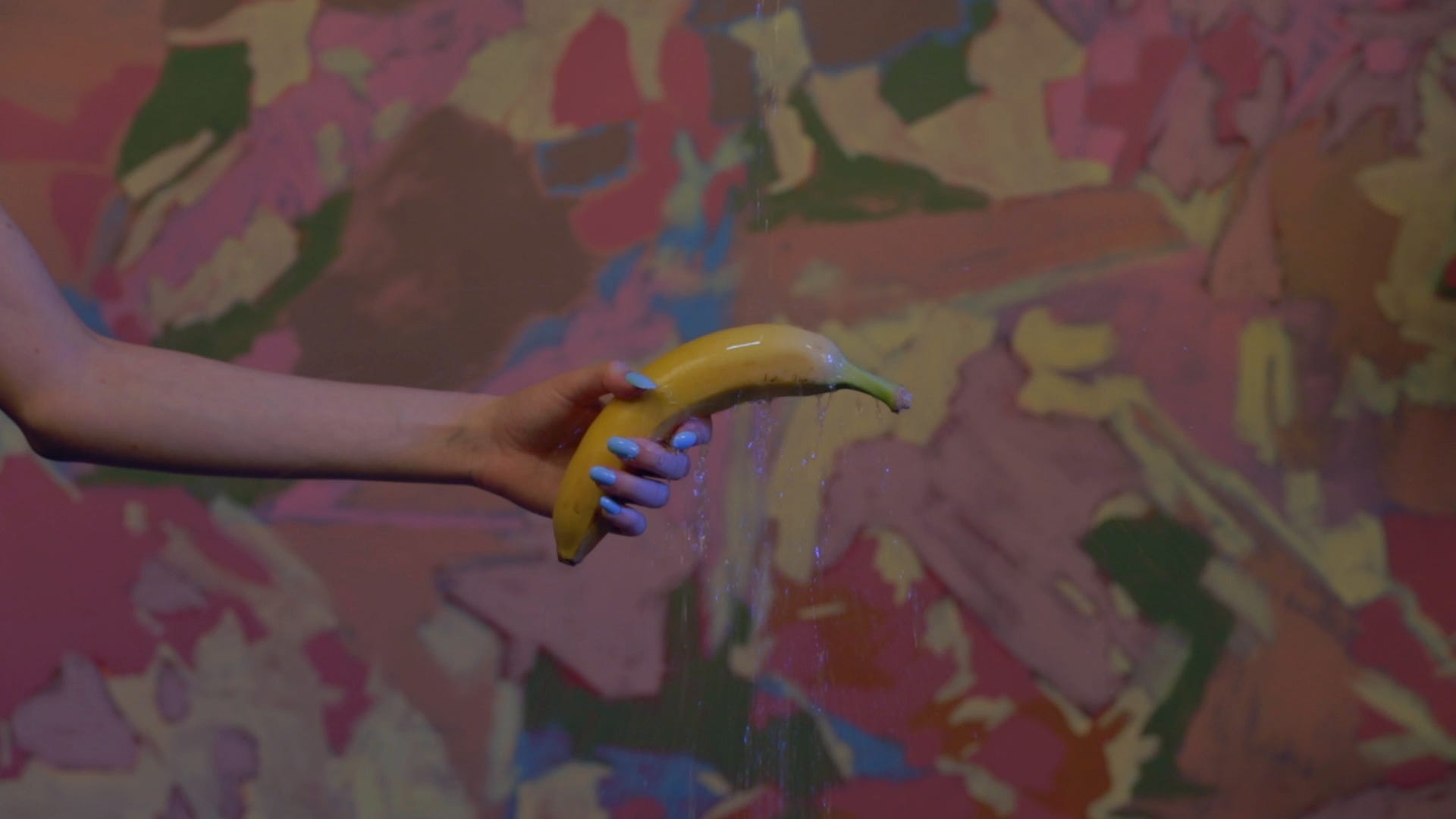
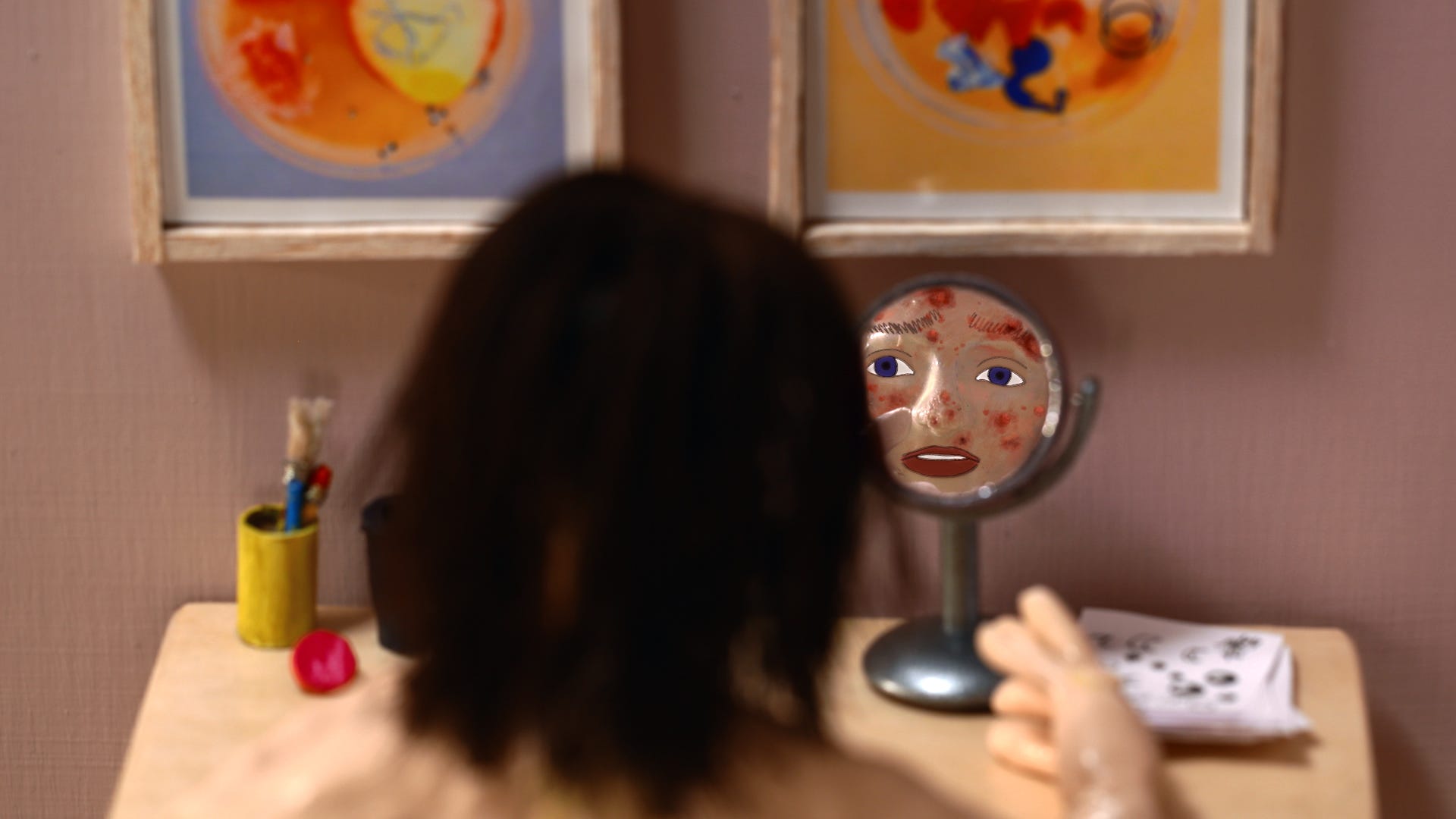
A multidisciplinary artist at heart, the animator Emily Ann Hoffman makes films spanning many mediums at once. Stop-motion animation remains at the core, though she finds her inspiration in disparate places. “It’s so piecemeal,” she says. While an undergraduate at the Rhode Island School of Design, Hoffman took an animation course on a whim, pivoting from an interest in painting and searching for an art form that worked for her. “Through that experience, it all really clicked for me,” she says. “I realized animation—and stop-motion, in particular—was this amazing Venn diagram of all my interests: handcrafting, sculpting things, painting backgrounds, making sets.” Hoffman leapt into making shorts after meeting collaborator and producer Sean Weiner, and her filmography reflects this interest in mixed media. Her short films interpolate different forms, as in Blackheads (2020), which alternates between stop motion and 2D as it tells the story of a woman dealing with the fallout of a breakup, while her stress manifests through an acne breakout and ghostly hand-drawn figures that appear in her room. Other shorts, like Bug Bite (2018), play with live-action photography.
For Hoffman, animation offers an opportunity to smuggle poignant stories to audiences who might be temporarily disarmed by the sense of comfort and wonder located in these handcrafted worlds.
Now on her seventh short film, Hoffman was recently named a fellow in the LAIKA x Gotham Animation Accelerator, a new initiative designed to support early- to mid-career animators developing short film pitches. As the news broke, I sat down with her to discuss her work.
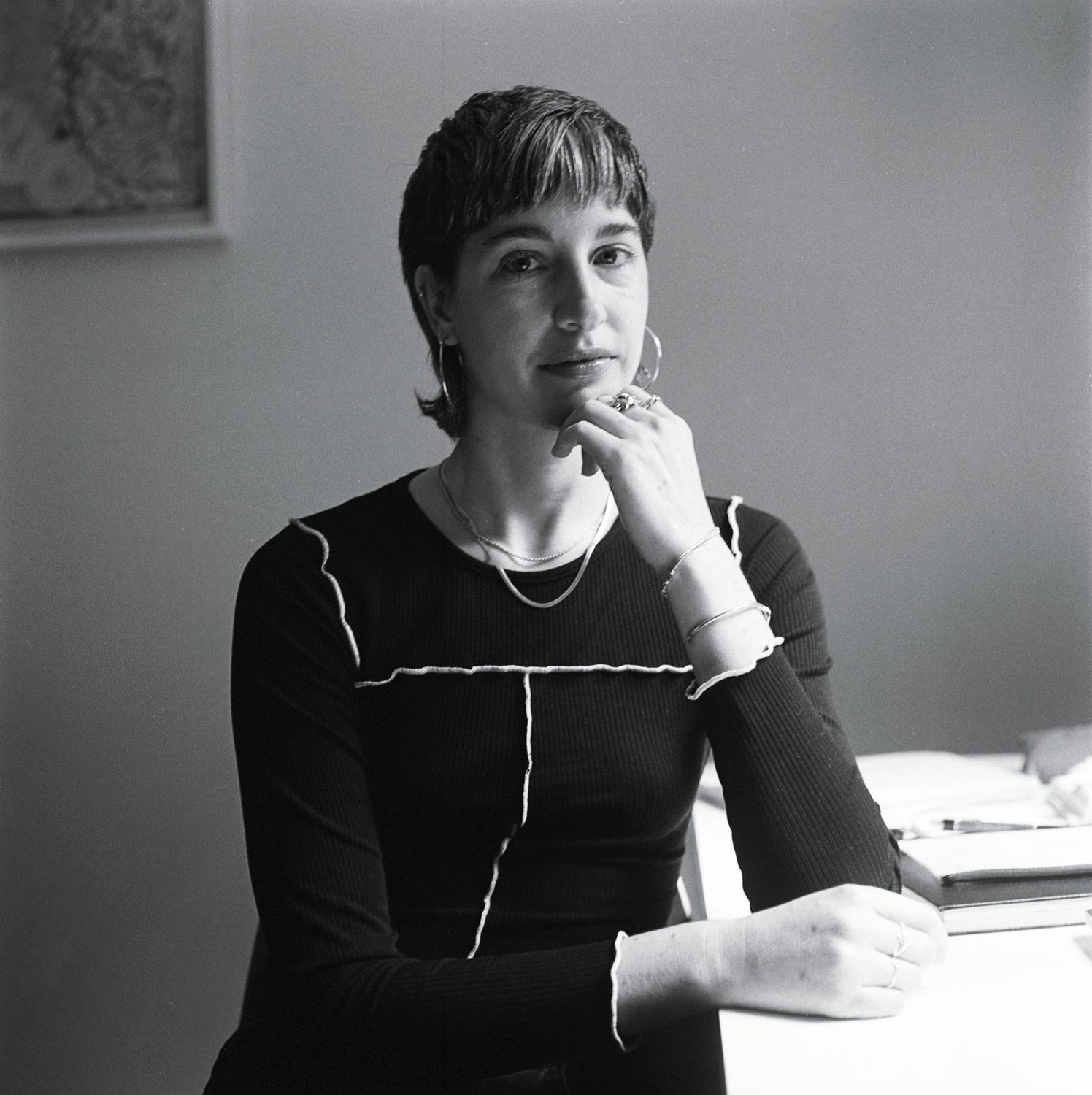
KAMBOLE CAMPBELL: Your short film pitch for the Animation Accelerator, The Pond Prince, is super charming. Where’d the idea for a former reality-star frog come from?
EMILY ANN HOFFMAN: I think my brain broke in the pandemic, and I just needed something fluffy and very distant from my world. Since then, I’ve been absorbed by reality TV, especially dating shows, specifically The Bachelor.
I’ve been working to develop a feature film for the past two years, working pretty intensely on that script, and I think it always helps to have something else that you’re working on that can take you away from it. So, I started just drawing this sad middle-aged frog dude a while ago—I honestly don’t know where it came from—thinking that I would maybe try to make a comic about this character. When this opportunity was announced, I thought about those sketches, and thought it’d actually be a really fun, bite-sized short film.
I love frogs. It’s not particularly deep; they’re just really kooky-looking creatures. There’s a stop-motion version of the Frog and Toad books; I love the really wonky aesthetic of that. I think frogs doing humanoid things in that and the Royal Ballet’s performance of “The Tale of Jeremy Fisher” is just delightful. And maybe [being a frog] makes [my character] a more accessible, sad, lonely man than a human [character] would be.
KC: You said you were working on it in a more illustrative context. What made you think of puppets as the best fit for the story?
EAH: Frog bodies are funky, right? They’re bulbous, have a slimy texture, and when they’re squat, they’re kind of cute, but strange if you stretch them out. I think they’d be great puppets for all those reasons. Reality TV is an escape, right? I think, oddly, that’s where I’m connecting the two: fabricating a world but this one has this delightful, beautiful pond with tiny handcrafted flowers, fireflies, and frogs.
We understand it’s fake in the same way that we understand reality TV is fake. The stop-motion will not try to convince anybody that it’s not stop-motion, right? And ultimately, this frog character, Big Mike, will reflect some of our very human experiences back to us. He’s lonely, and he’s reflecting on his mistakes from the past and just trying to form a connection, which I think is becoming harder and harder in our modern and digital worlds.
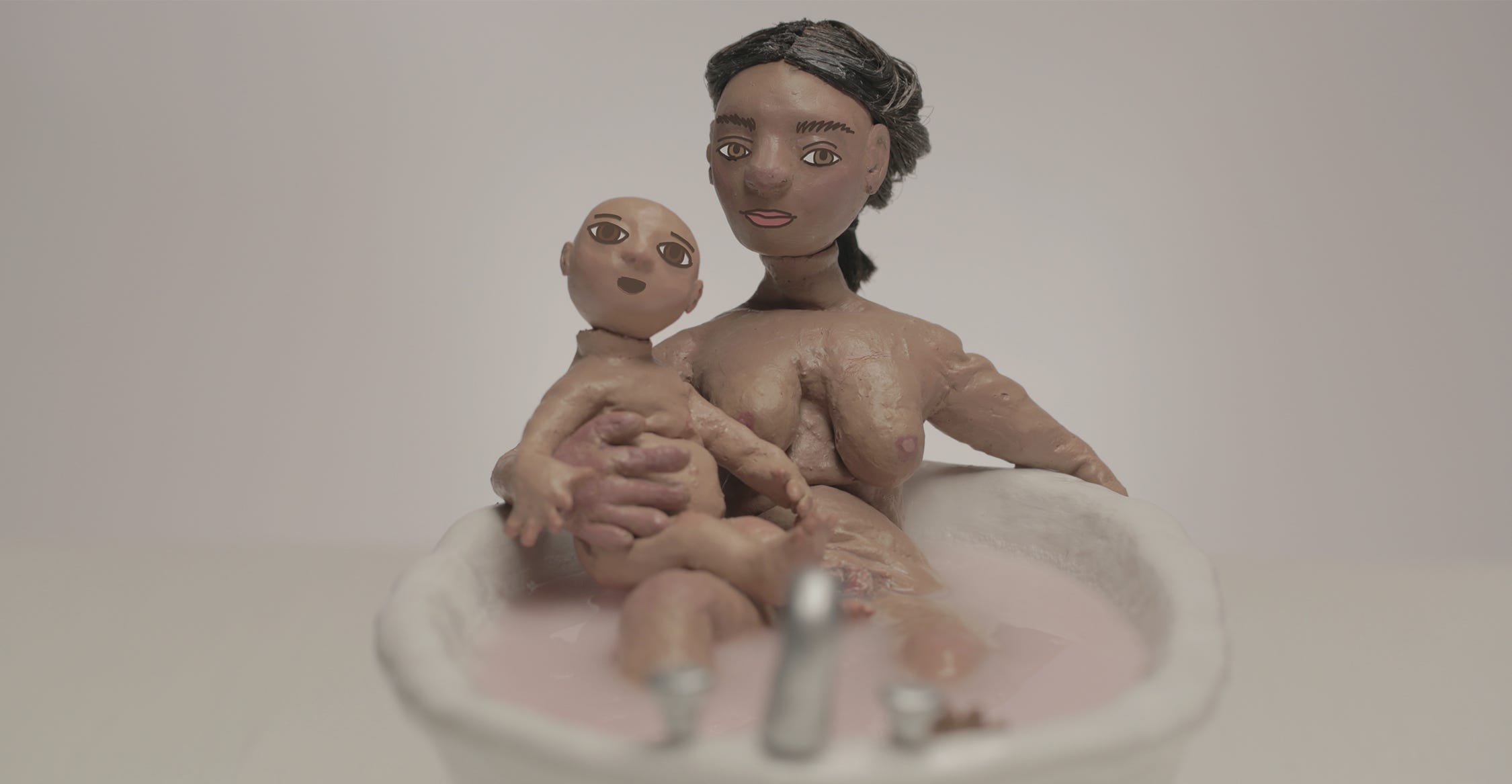
KC: You’ve mentioned you enjoy using stop-motion for stories about physical intimacy and our relationship with our bodies. Do you associate different animation mediums with different subjects or themes?
EAH: Absolutely. I’m a professor at NYU, and I teach stop-motion as well as Intro to Animation, a kind of sampling platter of different types of animation. And I tell this to the students constantly: that the medium you pick is going to influence the message because it’s the delivery mode of that message. Whenever I screen my film Nevada (2017)—which is about a couple who has to take Plan B after a birth control mishap—because it’s relatively grounded, the question I got was, “Why did you animate it instead of making it live action?” Because it could have been a live-action film.
With live action, we would be thinking about the actors more. With animation, and particularly stop-motion, where you’re seeing these weird, lumpy, maybe cute worlds, I think it disarms audiences because it’s this totally fabricated world. I like to catch audiences when their guards are down and sneak in a message that really hits them.
Also, I think you can tell when things are in the physical world. In a digital age, AI is obviously everywhere, and it’s corroding public trust of what we’re looking at. Because of that, I actually think it’s a great time to be in stop-motion because it’s the exact antidote for AI, right? It’s entirely human-crafted. I don’t mind that people can see fingerprints on the clay or hot glue every now and then. Whatever it is, I think leaving that in, you’re aware of the artist [who] made everything.
KC: How would you define the kind of relationship between the mediums in your work? What do you feel is the relationship between 2D animation and stop-motion?
EAH: [For Blackheads,] we created this rule that stop-motion was for more “real” moments happening in the present, as you can imagine reaching out and touching this physical medium; 2D animation was for things to do with flashbacks and imagination in the story.
At the time, I had started messing around with some digital painting. [After] leaving college and not having access to a studio space, it was harder to do a giant oil painting. With that film, I wanted to try to bring the language of those paintings in, so they have this loose feeling to them that I think works with memories.
Part of it is almost exercise. I’m trying to stay nimble in a lot of different crafts—partially because I just enjoy it, but also, I think play and experimentation without pressure is really important for artists to develop new techniques and ideas.
KC: How has interpolating other mediums into your work changed for you over time? For example, in The Emily & Ariel Show [2015], you use photos instead of drawn-on faces for puppets.
EAH: The important thing to mention with The Emily & Ariel Show is that it was a cocreation with my friend Ariel Noltimier Strauss, who’s a really talented artist herself. We arrived at that together. To be honest, I think a lot of the face animation stuff that I’ve done that’s not stop motion has come from a distaste for doing lip syncing. This sculpture artist Cecile Perra was creating these humanoid soft sculptures with collage-like photographic faces on them. We really liked that, so we tried that for a video format.
For Nevada and Blackheads, part of it was also that I find stop-motion replacement parts for mouths to be a little bit clunky sometimes, and for those two stories I wanted to have this really natural, intimate feeling. So, we rotoscoped the voice actors’ faces to get this very humanistic quality and to integrate some of their performance a little bit more into the puppets.
When it came to making live action, I think it was just learning to stay nimble and feeding off of what I was inspired by in the moment. I made this short film called OK, Call Me Back [2017]. “[After college], I was looking at a lot of female photographers, like Maisie Cousins and Prue Stent & Honey Long. [Stent and Long] are this female photography duo, and they were both photographing female sexuality in this really interesting way that was almost the same way we were talking about frogs: a little grotesque but also beautiful. I just hadn’t seen women’s sexuality depicted that way, and so I was like, “I want to try making something live action with this type of lens on it.”
With The Pond Prince, something that I foresee that I want to figure out is [how] to have this physical, sculptural quality to the frogs’ faces. I think I’m going to have to abandon my animated face method. So, that’s going to be a fabrication challenge I’m going to work through, how to get them to emote but still stay grounded.
KC: Some stop-motion filmmakers have said they enjoy stop-motion animation because of its proximity to live-action filmmaking. You have worked in live action as well—how do you feel about that overlap?
EAH: I think [having worked in live action] makes me more confident with stop-motion. For me, the first time I did live action, the biggest challenge was just the lack of control. Because, if we’re being honest, I’m an animator because I’m a control freak. In live action, [the work is] collaborative, it’s a team effort: I’m not going to pose my actor’s hand in a specific way. My therapist might think it’s a good thing to practice letting go and leaning into that collaborative aspect of live action. That can be really magical in a different way, seeing where other team members bring you. I now try to bring that back into stop-motion, especially as I aim to work on larger projects where I’m not necessarily doing every single thing.
I hope to hire some animators and fabricators to help me out and let it be more collaborative. That’s really exciting and can make the project so much better, because everyone has their own talents and ideas that they can bring to the table. I’m excited to hopefully hire some students who I’ve gotten to see grow and train with me, and then see what they can bring to the table as young creatives. I think that would be really fun.
 | A guest post by
|
Incredible interview, incredible artist!!!