

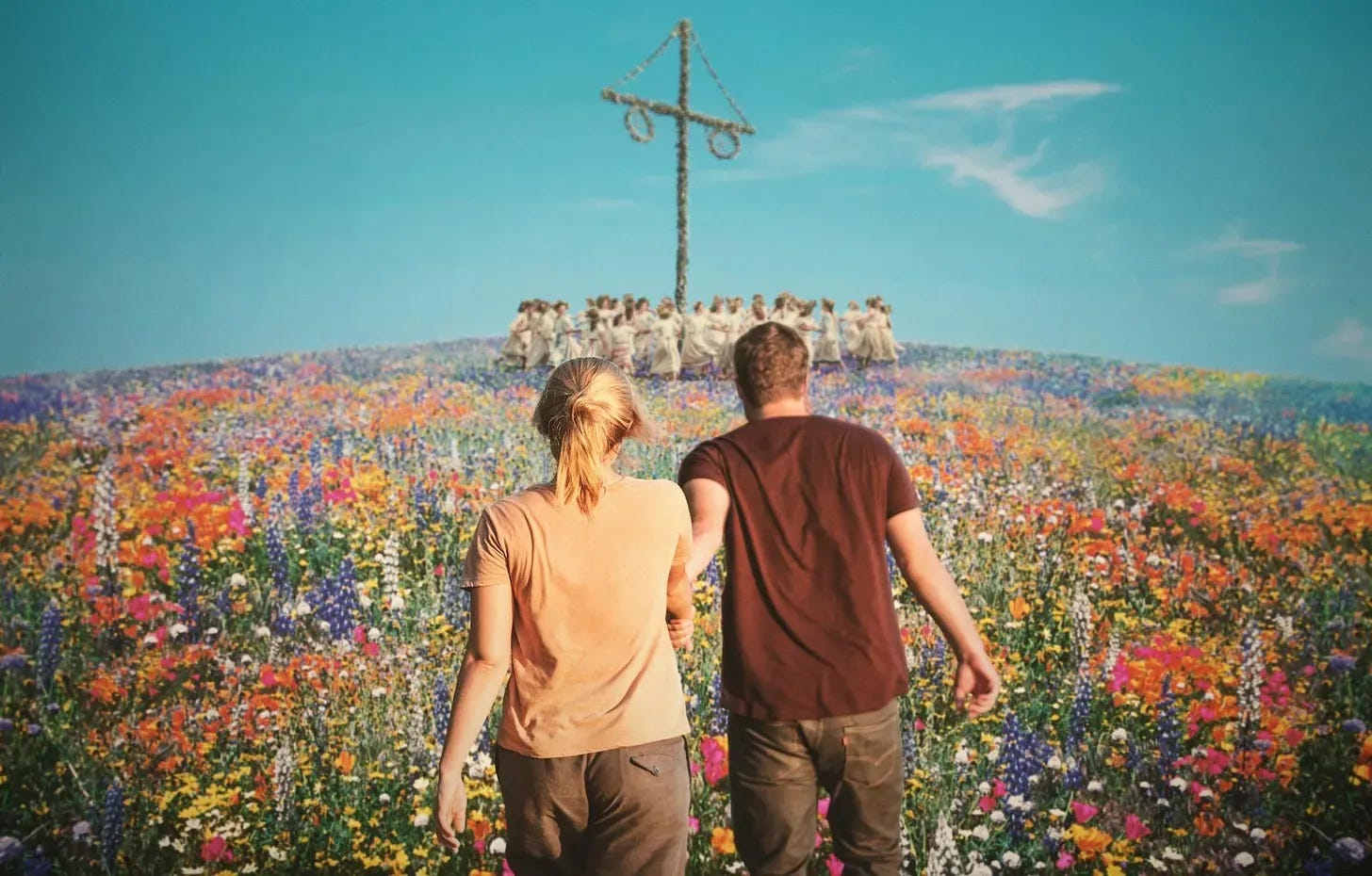
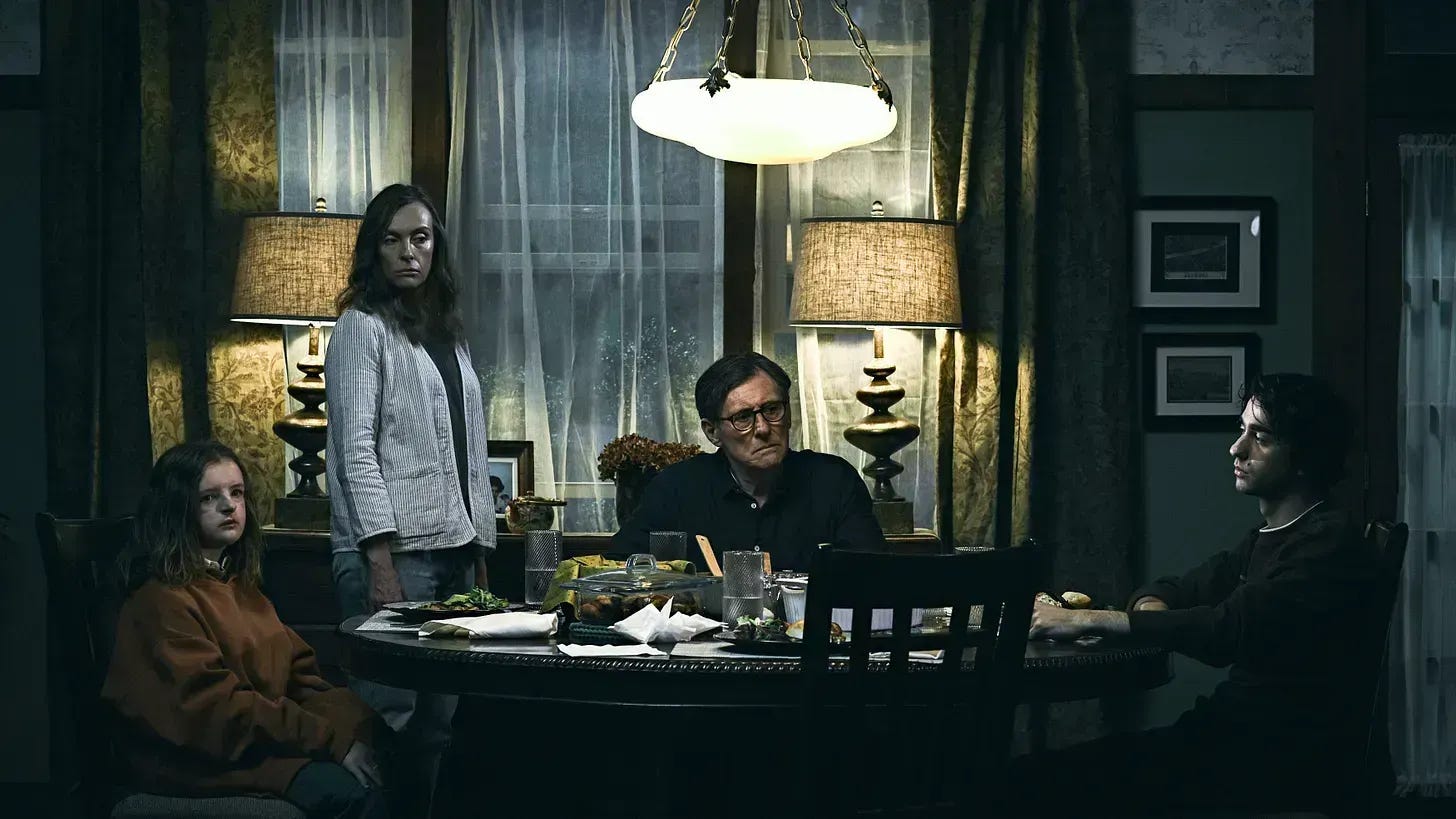
Sophie Lewis is used to getting noticed by all the wrong people. The Philadelphia-based author, essayist, and academic is known for her writing on family abolition and the communization of care; she published her first book, Full Surrogacy Now: Feminism Against Family, in 2019, and has been batting away panicked critiques of her work from the right, the center, and sometimes even the left ever since. That same year, she found time to watch two buzzy horror movies written and directed by Ari Aster: Hereditary (2018) and Midsommar (2019). Lewis published a piece of feminist film criticism about the way they depict (and critique) the nuclear family for Commune, a lefty magazine, and then continued about her business of interrogating the nuclear family, writing more thought-provoking books, and dreaming up new ways of deconstructing the patriarchy. For a writer this prolific, the essay was a blip; as she shifted her attention to her second book, Abolish the Family: A Manifesto for Care and Liberation, there was only so much time to consider things that go bump in the night.
That essay—cheekily titled “The Satanic Death Cult Is Real”—would come back to haunt Lewis in ways that she couldn’t have imagined. On July 4, 2025, about a dozen people gathered outside of the Prairieland ICE Detention Facility in Alvarado, Texas, for a noise demonstration in solidarity with the people imprisoned inside. That evening, a police officer was injured when one of the protestors discharged their firearm; 18 people were arrested in connection with the protest. The ensuing crackdown and ongoing legal saga has resulted in nine people—Savanna Batten, Zachary Evetts, Autumn Hill, Meagan Morris, Maricela Rueda, Daniel Rolando Sanchez Estrada, Benjamin “Champagne” Song, and Elizabeth Soto—being sentenced to more than a combined 500 years in prison thanks to the Trump administration’s eagerness to pin the protest on “antifa members” and use the Prairieland case as a precedent in its ongoing war on dissent.
What does any of this have to do with Sophie Lewis? She was left wondering the same thing when she woke up one day this past February and received a request for comment from a reporter.
One of the Prairieland defendants, Sanchez Estrada, had been arrested and convicted for the alleged crime of moving a box of zines after the protest, which he had not even attended. Among the materials in the box was a copy of Lewis’s Ari Aster essay, which had apparently spooked the feds enough to include it in their display of evidence. At some point after its 2019 publication, her essay had been printed out and stapled into a zine, then made its way to Texas (which, to be clear, Lewis takes as a compliment). As far as she can tell, the title was enough to draw their suspicion, though, as she later wrote for The Intercept, “There is a rich irony here: My little horror movie review was introduced to prove a conception of antifa that—like many of the monsters we scream at in horror flicks—isn’t quite real.”
In a conversation conducted from opposite sites of our shared city (she’s West, I’m South), Lewis told me more about her reaction to that dreadful news, the themes and insights that are actually present in her essay, and the Satanic death cult we should fear for real. As every horror film foretold, the call is coming from inside the house.
Kim Kelly: I am a wimp and don’t actually watch horror, but I do enjoy reading plot summaries of and film criticism about horror. So, for what it’s worth given the current situation, I really liked your review!
Sophie Lewis: Thank you. Horror is a great genre for thinking about class, carcerality, proletarian desire, and revolutionary feminism, [and]—I don’t need to tell you, obviously—my essay about Hereditary and Midsommar has nothing to do with the state’s horrendous Prairieland antifascism prosecution.
KK: You published it in 2019. That was basically seven hundred years ago!
SL: I mean, that, but also, the only reason the anarchist zine format of my essay made it into the case file is because of its title: The Satanic Death Cult is Real. It genuinely seems like the cops were like, “Aha! This is it. Antifa is confessing that it exists, and that it is a Satanic death cult!” It’s the same way that Jordan Peterson thinks of Karl Marx’s early Gothic poems, which put words about summoning the devil in the mouth of a fictional figure (who might be modeled a little bit on Karl’s young self, wooing his girlfriend Jenny).
KK: Did you even know this essay had been made into a zine?
SL: Yes, absolutely, I was very psyched it was made into a zine. That one and, I believe, a couple of other things I’ve written have been zinefied by the comrades at haters cafe, much to my humble pleasure and gratification.
KK: What an awful feeling it must have been to see your work dragged into this ugly mess. The prosecutors would’ve been much more freaked out if they actually read it and saw what you’re implying that the Satanic death cult actually is…
SL: Exactly. It’s the family, my guy. The private nuclear household.
KK: Right, the content is so much scarier than the title if you’re a chud.
SL: Exactly. Like all capitalist universal values, [it] is built on destruction—in this case, the family form as we know it could not have emerged without all the violence of enclosure (to make private property possible), colonial genocide (to make kinship bourgeois), reproductive stratification (along class and racial lines), and patriarchal terrorism against women and children, queer people and disabled people. In a certain sense, it’s almost like the essay has, thematically, nothing to do with the case, but also everything to do with it, because it’s a case that is all about protecting the nation—whose “cellular” building block is the capitalist family—from threats to its borders that come from migrants and trans people. I’m almost offended that they didn’t read it; they would have had so much more to go on. [Laughs.]
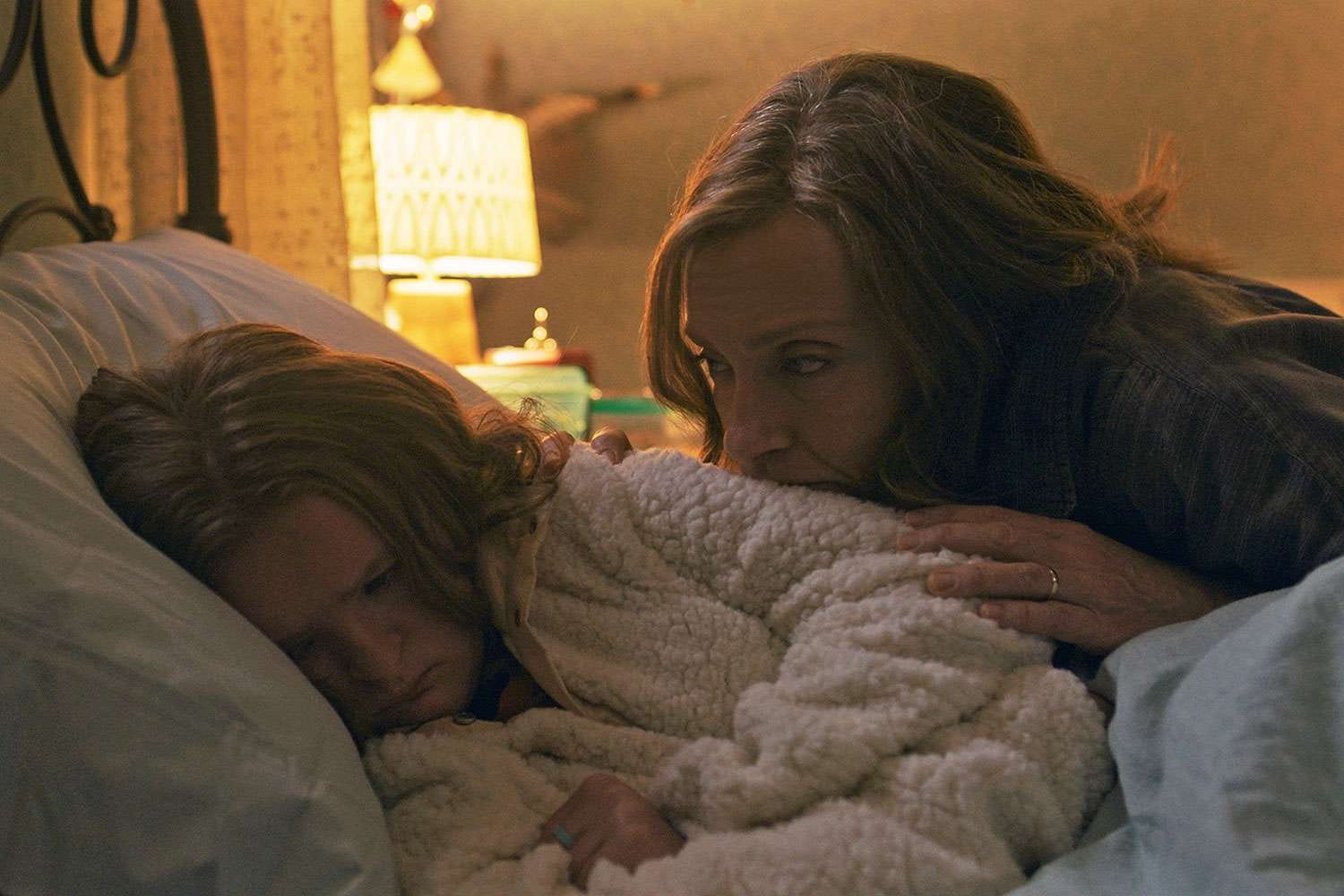
KK: One takeaway from the actual essay: you essentially say that it’s easier for people to believe in demons than to admit that the nuclear family model isn’t working. Why do you think that is?
SL: Ooh, great way of asking that question. One way of answering it would be to say that the demons are the externalized representations, channelings, and incarnations of what isn’t “working” in the family form (although I might also ask … working for whom?). The family is naturalized in our culture to the point of seeming like a law of the universe. So much ideological effort flows into telling us over and over again that there is one way to be, and it involves the form of the couple, privatized health care, and a kinship concept centered around biogenetics. We feel like we are fundamentally manufactured by our families and would not know who we would be or could have been in a scenario where how we were made had been different. We understand the limitations, the brutality, and the scarcity of family, but we fear that any alternative would be worse or that no alternative actually exists. So demons become quite a comforting psychical option. Instead of the violence coming from inside the house, we can tell ourselves they are coming in from the outside and preying on something that would and could be fundamentally good—the family—if only it could fight off or exorcise the demons.
KK: It also occurs to me that the very people who held up this essay as an evil thing are now breaking up Prairieland families themselves, whether it’s via deportation or incarceration or criminalization. It’s ironic, in a diabolical way.
SL: Well, exactly! “Ironic in a diabolical way” is exactly it. I talk about this a lot in Abolish the Family, and in an essay called “Destroy the Family to Realize Its Promise.” Abolition is not simply destruction, though, but that’s the whole history of the family: states and ruling class powers destroying families in order to impose the family [on others].
KK: As you write in the essay, “To abolish the family, these images seem to whisper, would be to abolish the self, to unmake one’s very face. That process could, potentially, be as beautiful as it is terrifying.”
SL: I was thinking recently about how “better dead than red” really was a thing. People proclaimed proudly from pulpits that they would rather their sons and daughters died today, as God-fearing Americans, than tomorrow someday as godless communists—which seems relevant to that quote you pulled, somehow. We really are in, or at least some people really are trying to put us into, another red scare.