

Remembering Sam Neill
One of the proverbial good guys, Neill threw himself headfirst into blockbusters and B movies alike.
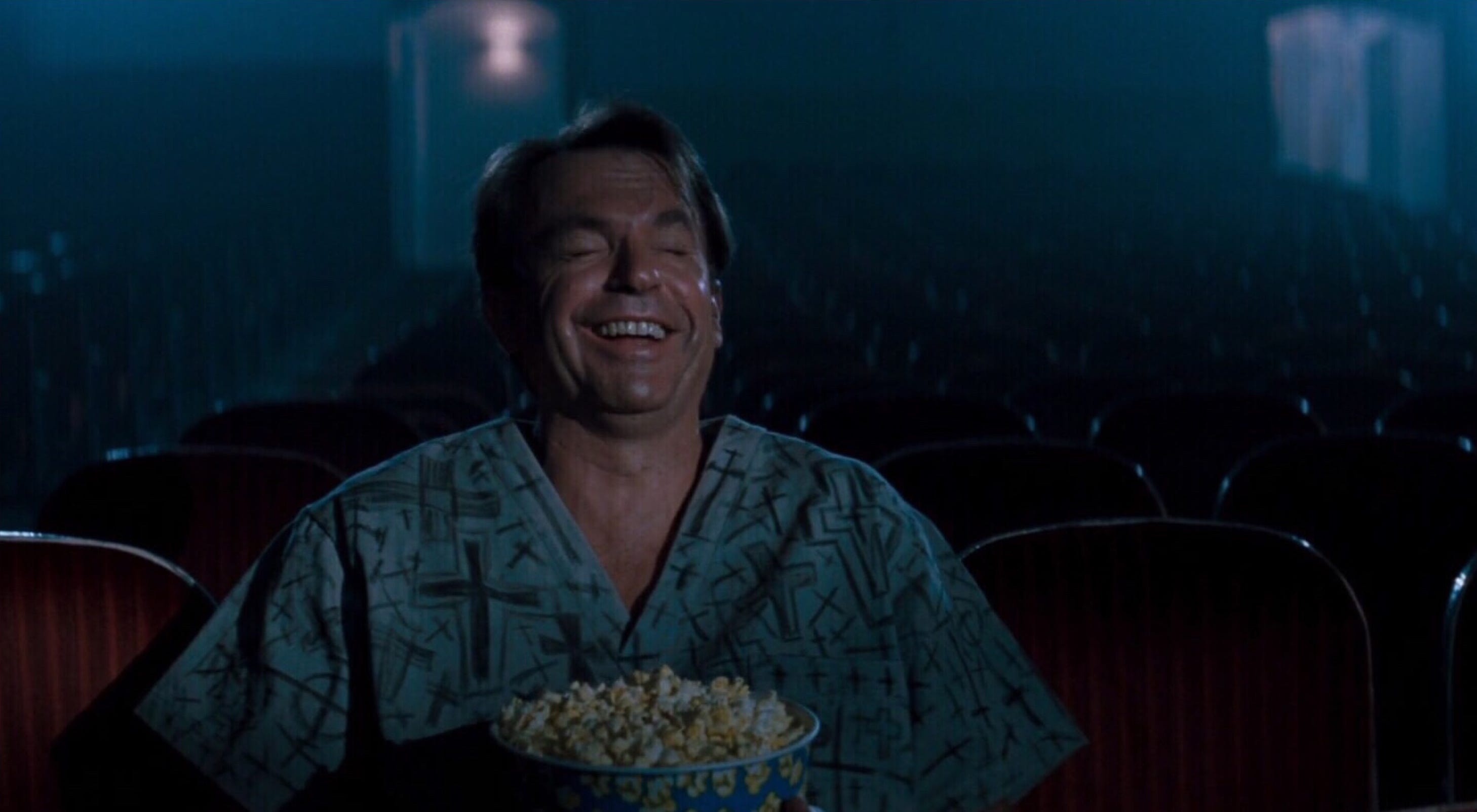
I never got to meet Sam Neill, but I thought of him as a neighbor for a very specific reason: like me, he had sat in the front row to watch a movie at the Eglinton Theatre. There he is as cynical insurance investigator turned wild-eyed paranoiac John Trent at the end of In the Mouth of Madness (1994), cheerfully chowing down on some popcorn as he enjoys a 35mm print of what will seemingly be the last movie ever screened, in Toronto or anywhere else.
Screenshots from that John Carpenter sequence kept popping up on my timeline in the hours following Neill’s death last week at the age of 78, and my melancholy at losing one of the great modern movie actors was tempered by a sweet stirring of local pride. My wife and I were married at the Eglinton after its transfiguration from a midtown movie palace into an upscale event space, and insofar as I saw my life flashing before my eyes during my vows, Neill’s face, covered in black Crayola crosses, was somewhere in the mix. The rationalist coming unglued in the face of cosmic horror is a stock part, but Neill imbued it with humor and pathos. “This is not reality!” Trent cries out when confronted with an impossible apparition, but he’s not fooling anybody, least of all himself. By refusing to condescend to his lurid B-movie material, Neill inhabits it like a church; he gives In the Mouth of Madness’s lovingly crafted Cthulhu pastiche its ornery, wounded, human soul.
“The world has lost a remarkable actor, father, farmer, and friend,” reflected Carpenter in a recent Facebook post. Celebrity obituaries can be echo chambers for shameless gushing, but Neill’s reputation in life as one of the proverbial good guys—a stalwart collaborator, committed environmental activist, and generous philanthropist—was very obviously earned. The “farmer” persona alluded to by Carpenter represented the homebody apotheosis of an actor often praised for his everyman qualities; Neill’s social media feeds on Twitter and Instagram under the handle @TwoPaddocks—named for his celebrated organic wine estate in Central Otago, New Zealand—remain load-bearing platforms for his legend. Those pages were always chockablock with good jokes and candid selfies with cows, chickens, pigs (supposedly his yoga partners), and ducks. “When the world seems close to pear shaped... CUDDLE A DUCK [ It works...]” Neill advised on Twitter in December of 2019, as if anticipating some incipient worldwide calamity. Neill was a born poster, and it’s to his credit that he quit the platform after its purchase by Elon Musk: “I’m just going to walk quietly away from Twitter for now.... I’m not happy to be in a place that is so angry & divisive.”
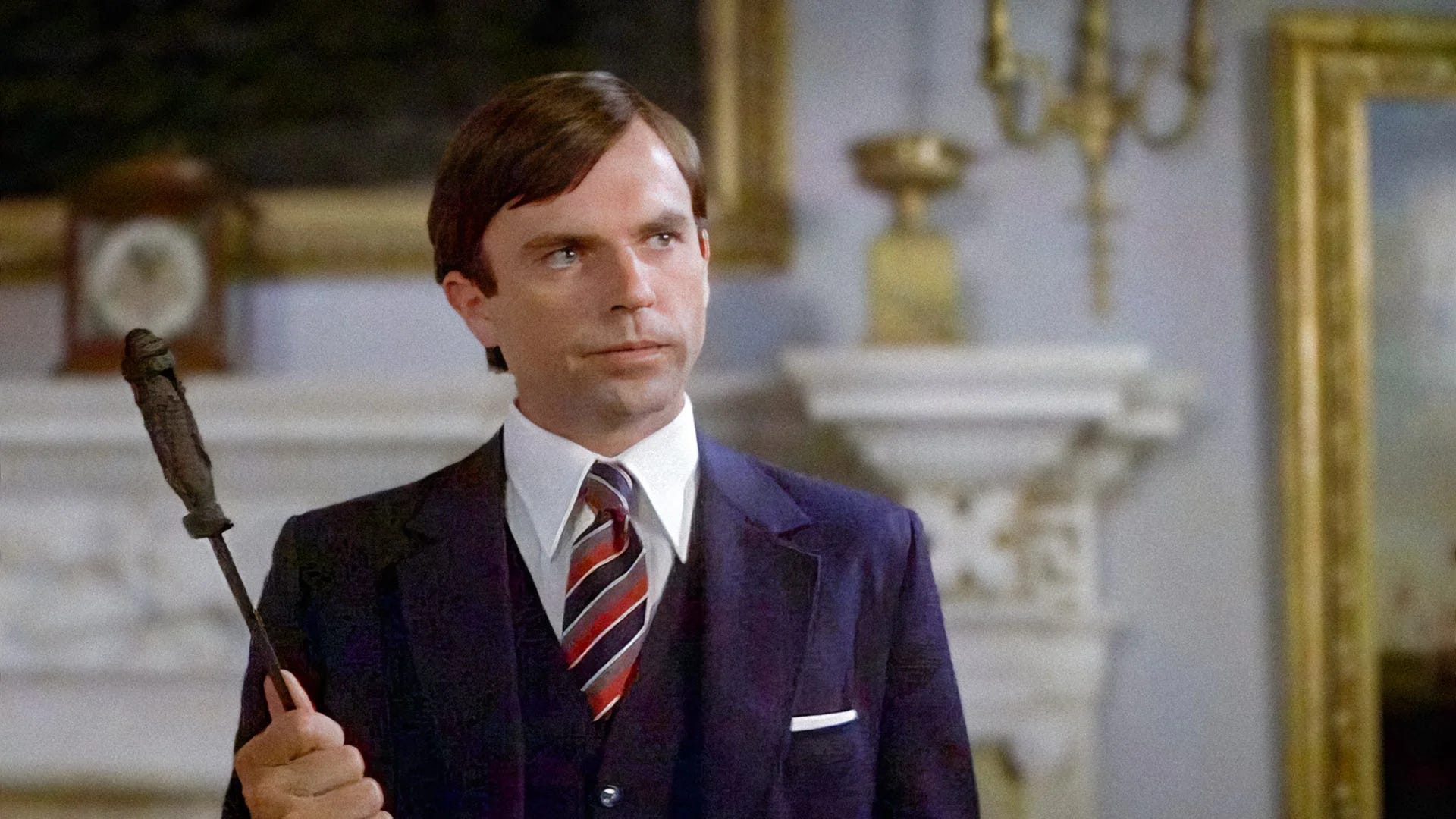
The sweetness of Neill’s public-facing gentleman rancher act was belied by the malevolence he was often asked to embody onscreen: his breakthrough role in an American film was as a Washington power player and CEO who happens to be the Antichrist in The Omen III: The Final Conflict (1981). That mostly unloved sequel was clearly the lesser of the two horror movies Neill appeared in that year, after Andrzej Żuławski’s Possession; the story goes that Neill was recommended to the brain trust behind the Omen franchise by no less than James Mason, who’d seen the actor in Gillian Armstrong’s 1979 arthouse hit, My Brilliant Career. (“I suppose he just liked the cut of my jib,” said Neill in 2001). Playing a diverting—and deceptive—to-the-manor-born suitor to Judy Davis’s impoverished aspiring writer, Neill evoked something of Mason’s various romantic rogues, with a bit of Montgomery Clift thrown in; “I unconsciously made you a LUST object!” wrote Armstrong in her own encomium.
Those ladykiller looks were at their apex in the mid-1980s, and there’s an alternate timeline in which Neill parlayed them into a profitable run as 007. His slightly stilted, gun-toting screen test for the Broccolis can be seen in a documentary about the making of The Living Daylights (1987); even without reading Neill’s raconteurish 2023 memoir, Did I Ever Tell You This?, it’s obvious that his heart wasn’t in the shaken-not-stirred shtick. Neill told an ABC interviewer that his Bond audition was “one of the most mortifying times of my life.”
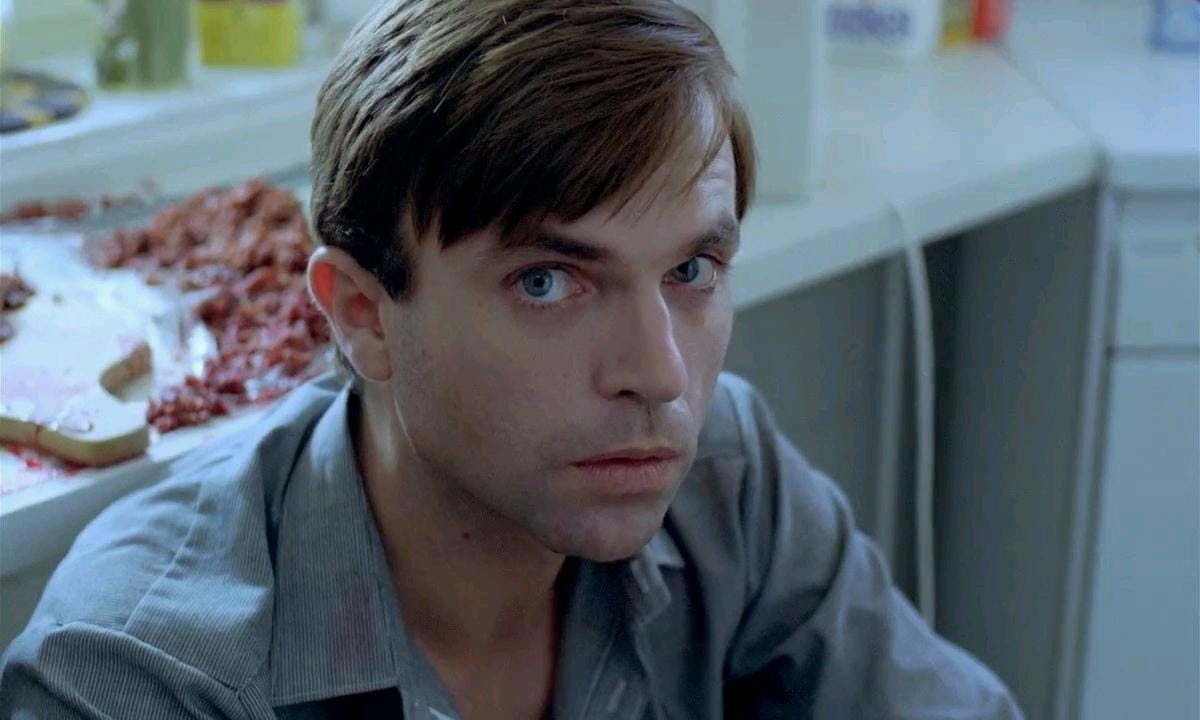
Strong words for a guy who survived a shoot with Żuławski, and darned if his part in Possession as a licensed-to-kill spy who suspects his younger wife (Isabelle Adjani) of an affair doesn’t play as its own sort of perverse cloak-and-dagger thriller (albeit with more borderline-tentacle-porn than the typical Ian Fleming scenario). Neill would, of course, get his franchise headliner moment—and money—in Jurassic Park (1993), where, as Dr. Alan Grant, he offered up a solid (and cost-effective) riff on Harrison Ford’s signature rationalist daredevil Indiana Jones act. Drs. Jones and Grant are both believers in putting things in museums, but the latter deals in living, breathing, rampaging artifacts of the past.
Supposedly, Steven Spielberg had enjoyed Neill’s tersely heroic, physically demanding lead performance in the Australian survival drama Dead Calm (1988); Phillip Noyce’s film is basically just lurid, quasi-Polanskian trash (not a bad thing!), but the scenes between Neill and a young Nicole Kidman draw a bead on one of his greatest gifts. Where some alpha-male types tend to do their best work either in isolation from or at odds with female costars, Neill was always an alchemist with actresses. Not only did he hold his own with the likes of Davis, Adjani, Meryl Streep (A Cry in the Dark, 1988), and Holly Hunter (The Piano, 1993), but he seemed to draw the best out of them as well. The funniest scenes in Jurassic Park are the ones where we’re obliged to see Neill—lustfully, but also with bemused and begrudging affection—through the wide eyes of Laura Dern.
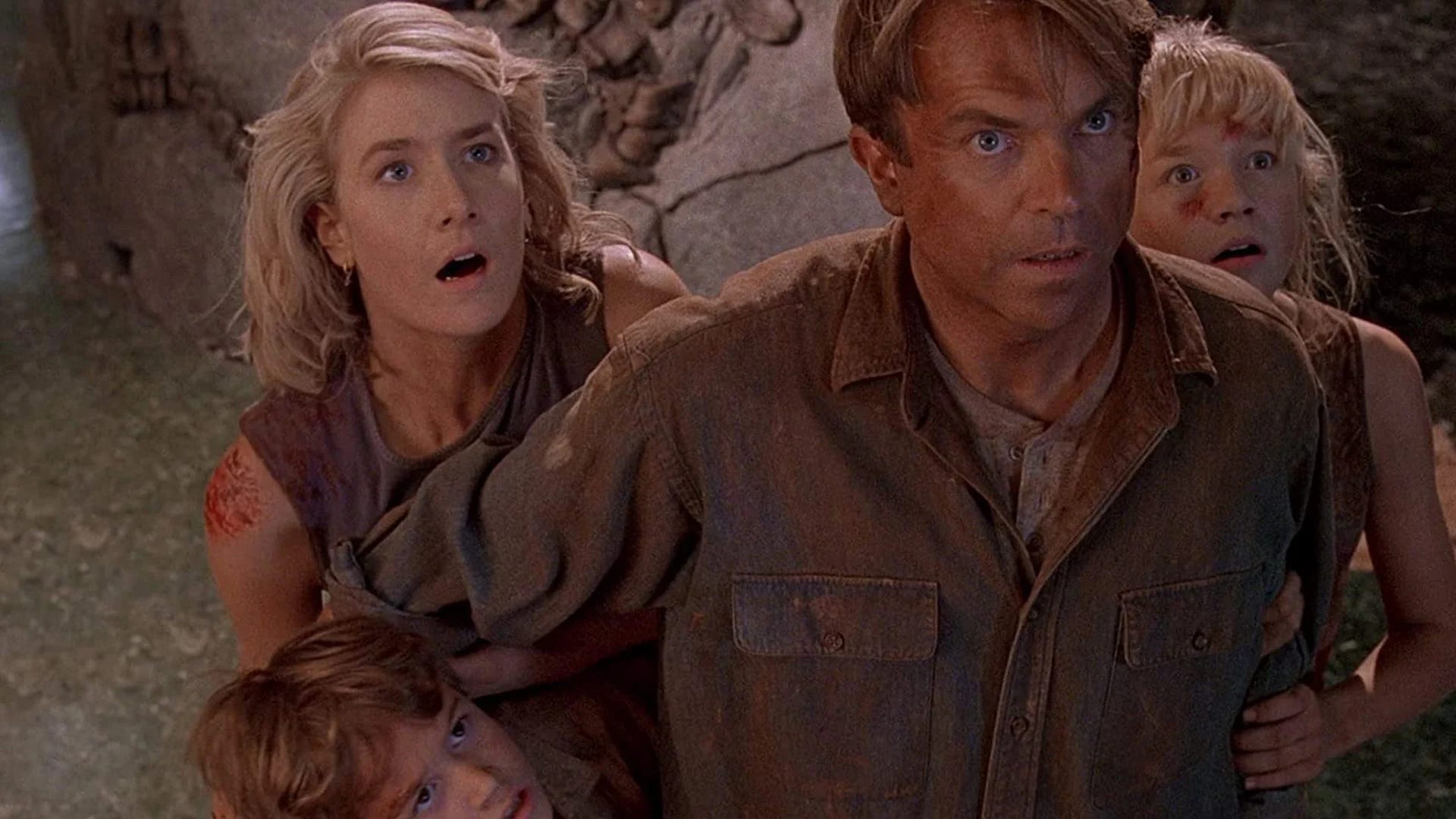
Even if he never came out and said it, Neill seemed to understand his main job in Jurassic Park was to sell the special effects without distracting from them. His Spielberg Face upon espying that skyscraping brachiosaurus is Hall of Fame stuff, as is the subsequent, beautifully bewildered line reading, “They do move in herds,” delivered under his breath, like an affirmation or a prayer. It’s telling that nobody seemed to hold Neill’s multiple returns to the island against him—not even in the case of Jurassic World Dominion (2022), one of the worst studio releases of the 21st century. Self-deprecation is a great party trick; Neill’s most widely circulated anecdote about being the face of a billion-dollar blockbuster had to do with his passing gas in front of Princess Diana at the London premiere and plotting to place the blame for the stench on his young son.
The roles Neill took in the immediate aftermath of his biggest hit testify to his eclecticism and honest affection for old-school schlock: not just In the Mouth of Madness, but Event Horizon (1997), which peaks when his (again Lovecraftian) madman bad guy shows up, his face lacerated and bleeding, his eyes plucked out. As for the noticeable proliferation of seventh-continent-set and/or -financed titles dotting Neill’s filmography on either side of the millennium, they suggest a man who liked to stay close to home. Not that Neill’s patriotism was uncomplicated: “If a national cinema is a reflection of ourselves, then ours is a troubled reflection indeed,” he said in Cinema of Unease (1995), an hour-long documentary on the history and themes of New Zealand moviemaking that he codirected with Judy Rymer. The film’s thesis was that the repressive religious fundamentalism of his country belied powerful currents of guilt and fear; Neill drew attention to depictions of Māori characters and communities, leveraging an appreciation of his countrymen’s artistry against an acknowledgment of its limitations.
Neill was candid about the health problems that plagued him in his seventies. “I’m not afraid of dying,” he told the BBC in 2023 after being diagnosed with non-Hodgkin lymphoma. “What I don’t want to do is to stop living, because I really enjoy living.” Cue that wonderful image of our man, rapt and happy in front of the Eglinton’s big screen, taking in the end of the world as a B-movie matinee; the mouth of madness curves, wryly and finally, into a smile.
 | A guest post by
|
I enjoyed this. I’ve been seeing so many clips on social media of the silly stuff Neill put together during the pandemic, etc. (like finding a “dinosaur” in his vineyard and apologizing to Helena Bonham-Carter, as his smartphone, for forgetting her when he went to the store). I’d never realized how genuinely funny and good-natured he was. A true legacy.